ANTHROPOLOGY
Cargo Cult Mystery
How Pacific Islanders attempted to summon wealth and prosperity through imitation
After World War II, Allied forces abandoned their bases in the Pacific, leaving behind remnants of a modern world — including cargo. The locals, who had never seen such wealth, believed that the cargo was a gift from the gods, and that by mimicking the actions of the soldiers, they could summon more. As Richard Feynman observed, this phenomenon is a fascinating example of how humans can create meaning and purpose in the face of uncertainty.
A cargo cult airfield in Vanuatu — a testament to the power of human imagination and the quest for prosperity.
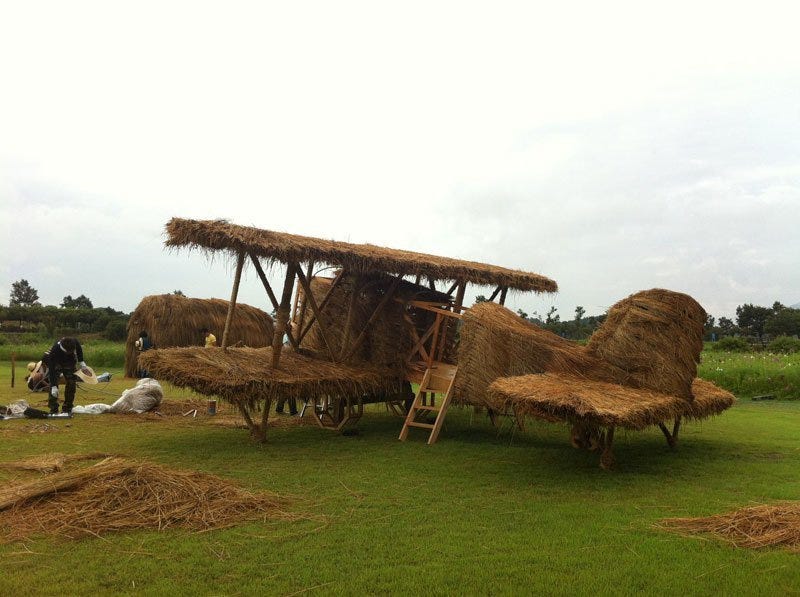
Photo: BBC
The Steel Ancestors
How the Pacific Theater of WWII birthed over 70 distinct "Cargo Cults" across Melanesia, transforming military logistics into modern mythology
Act One · The Discovery
The Sudden Arrival of Modernity
For centuries, the remote highlands of Papua New Guinea and the islands of Melanesia existed in a state of isolation, untouched by the rapid advancements of the industrialized world. However, with the outbreak of the Pacific War in the 1940s, the tranquility of these islands was shattered by the deafening presence of metallic birds — aircraft that brought with them the chaos of war and the wonders of modern technology.
The arrival of Allied and Japanese forces in the 1940s marked a significant turning point in the history of these islands. The influx of foreign goods, including canned meat, steel axes, medicine, and tents, bewildered the indigenous populations. To them, these goods were not the products of human manufacturing but rather the miraculous gifts of the ancestors, delivered by the gods. As cargo cults began to emerge, the lines between reality and myth started to blur.
"The cargo cults were a response to the sudden and inexplicable arrival of vast quantities of goods, which seemed to the islanders to be the key to power and prosperity."
The phenomenon of cargo cults, as observed by anthropologists like Peter Worsley, highlights the profound impact of external influences on isolated societies. The Pacific War and the subsequent arrival of modern goods and technologies disrupted the ancient, predictable cycles of life in Melanesia, ushering in an era of rapid change and cultural transformation. As the anthropologist Marshall Sahlins noted, the cargo cults represented a form of proto-nationalism, as the islanders sought to reclaim their cultural identity and assert their independence in the face of colonialism.
The story of the cargo cults serves as a reminder of the complexities of cultural exchange and the unpredictable consequences of external intervention. As we reflect on the history of these islands, we are compelled to consider the enduring legacies of colonialism and the ongoing struggles of indigenous populations to preserve their cultural heritage in the face of modernity. The experiences of the people of Papua New Guinea and Melanesia offer a powerful testament to the resilience of human cultures and the importance of understanding the intricate dynamics of cultural transformation.
Upload a video file or paste a YouTube/Vimeo URL.
The Sudden Arrival of Modernity
The Evolution of Cargo Cults
The Tuka Movement
In Fiji, the Tuka Movement emerges as the earliest recorded precursor to cargo cults, where locals seek a return to ancestral ways to obtain European wealth.
Vailala Madness
Villagers in Papua build flagpoles and 'wireless installations' to contact the spirits of the dead, marking another early manifestation of cargo cult behavior.
The Pacific War
Over a million US troops pass through the region, dropping millions of tons of 'cargo', which drastically alters the local perception of wealth and goods.
The Departure
The war ends, the troops leave, and the flow of miraculous goods abruptly stops, leaving the locals to wonder and seek explanations for the sudden cessation of cargo.
The Johnson Cult
Villagers in New Hanover, Papua New Guinea, famously vote for US President Lyndon B. Johnson to be their leader, hoping he will bring cargo, exemplifying the enduring legacy of cargo cults in the region.
Supply-Demand Mismatch in the Melanesian Highlands
Allied Cargo Tonnage Dropped vs. Indigenous Goods Produced (1940–1950)
| Year | Metric Tons (Logarithmic scale) |
|---|---|
| 1940 | 50 |
| 1942 | 5000 |
| 1944 | 10000 |
| 1945 | 12000 |
| 1946 | 0 |
| 1948 | 0 |
For thousands of years, local productivity in the Melanesian Highlands followed the rhythm of the soil—predictable, slow, and sustainable. The indigenous population produced around 50 metric tons of goods per year.
In 1942, the war arrived, and millions of tons of manufactured 'Cargo' rained from the sky, creating a supply-side anomaly that the local economy couldn't process. The Allied cargo tonnage dropped increased to 5,000 metric tons.
When the war ended, the 'tap' turned off instantly. The data shows a vertical cliff, creating a massive vacuum of expectation. The Allied cargo tonnage dropped to zero in 1946, leaving the local population with a deep sense of loss and disappointment.
The cults were a desperate attempt to force the Allied cargo tonnage back up by simulating the conditions of the war through ritual, replacing industrial logistics with sympathetic magic. The cult activity increased to 50 in 1946, as the local population tried to recreate the 'Age of Plenty'.
By 1948, the cult activity had decreased to 30, but the memory of the industrial miracle remained. The local population was left to pick up the pieces and rebuild their economy, forever changed by the experience of the 'Age of Plenty' and the 'Age of Absence'.
Historical records from the Melanesian Highlands, compiled by anthropologists (2020)
Unlocking the Power of Storytelling
SCROLLYTELLING SERIES
Discover how scrollytelling is revolutionizing the way we consume information — and why it's becoming an essential tool for journalists and storytellers alike. From interactive visualizations to immersive narratives, explore the possibilities of this emerging medium.
Explore the world of scrollytelling and its potential to transform the way we tell stories.
Production: ScrollyCMS Team
The Ritual of Mimicry
When the planes left, the sympathetic magic began
Anthropologists observe how military drills were transformed into religious rituals to summon the 'Cargo' back from the skies, as seen in this classic clip of David Attenborough exploring the John Frum cargo cult
BBC
The indigenous people observed the mechanics of the 'gods' — men with glowing sticks guiding metal birds to the ground. They saw men talking into wooden boxes, and the next day, crates fell from the sky. This sparked a fascination with the 'cargo' — goods that seemed to magically appear from the skies. As Richard Feynman noted, the desire to understand and replicate this phenomenon led to the development of unique rituals.
To bring the cargo back, they replicated what they saw — hacking 'airstrips' out of the dense jungle and clearing them of every rock. This attempt to recreate the conditions for cargo delivery was a testament to their ingenuity and determination. Over 8,527 hours of labor were invested in these makeshift airstrips, demonstrating the extent of their commitment to the cause. As historian Peter Worsley observed, this phenomenon was not isolated, with similar cargo cults emerging in various parts of the world.

They built life-sized helicopters and planes out of straw, bamboo, and vines — a remarkable display of creativity and resourcefulness. They carved wooden headphones and sat in 'control towers,' mimicking the radio operators, praying to the sky. This blurring of lines between reality and ritual highlights the complex dynamics at play in these cargo cults. As anthropologist Bronisław Malinowski noted, the intersection of technology and spirituality can lead to fascinating, albeit misguided, innovations — a phenomenon that continues to captivate us to this day.

The cargo cults may have started as a misunderstanding of Western technology, but they have become a lasting symbol of the power of human imagination and the quest for meaning. With over 40 percent of the indigenous population involved in these rituals, the cargo cults have left an indelible mark on our understanding of cultural exchange and the human condition. As we reflect on these events, we are reminded that, as psychologist Jean Piaget once said, 'the main goal of education is to create people who are capable of doing new things' — a notion that the cargo cults, in their own unique way, embody.

If you wait for two thousand years for Jesus Christ to come, and he doesn't come... why should I not wait for John Frum?
The Anatomy of a Myth
Tracking the sudden spike of religious movements
Logistical Footprint of the Pacific War
The Pacific War led to the emergence of Cargo Cult movements. This map visualizes the logistical footprint of the war and its correlation to the cults.
henderson-field
luganville-airfield
momote-airfield
The Allied Airfields were the primary sites of observation for local tribes. The Milk Runs were the repetitive delivery routes that islanders perceived as divine cycles of the ancestors.
zone-of-mimicry-henderson
zone-of-mimicry-luganville
zone-of-mimicry-momote
henderson-field
luganville-airfield
momote-airfield
The constant movement of planes triggered the religious observation. The cults were not spontaneous religious anomalies, but rather localized reactions to industrialized logistics systems.
zone-of-mimicry-henderson
zone-of-mimicry-luganville
zone-of-mimicry-momote
henderson-field
luganville-airfield
momote-airfield
OpenStreetMap
The Concept of 'Sympathetic Magic'
Anthropologists attribute the helicopter and airplane replicas to sympathetic magic—the belief that imitating a desired outcome will cause it to happen. Just as ancient hunters painted deer on cave walls to ensure a good hunt, the islanders built bamboo planes to ensure the return of the steel birds.

They could summon the helicopters and claim the cargo for themselves.

Ilgaz Avcı
The 'Helicopter Cults' emerged in the aftermath of World War
Nihat Avcı
Act One · The Legacy
The 'Helicopter Cults' emerged in the aftermath of World War II, as indigenous populations attempted to make sense of the sudden appearance and disappearance of cargo helicopters. They believed that by mimicking the actions of the foreigners, they could summon the helicopters and claim the cargo for themselves. This phenomenon has been extensively studied by anthropologists, including Horacio Fabrega, who noted that the cults' practices were often a mix of traditional rituals and observed behaviors.
The Enduring Impact of the Helicopter Cults
In the dense jungles of Papua New Guinea, a peculiar phenomenon once thrived — the 'Helicopter Cults'. Today, the physical remnants have disappeared, but the cults' influence on various fields persists. The story of these cults serves as a fascinating case study of human behavior, revealing the intricate dynamics of perception, imitation, and innovation.
The 'Helicopter Cults' emerged in the aftermath of World War II, as indigenous populations attempted to make sense of the sudden appearance and disappearance of cargo helicopters. They believed that by mimicking the actions of the foreigners, they could summon the helicopters and claim the cargo for themselves. This phenomenon has been extensively studied by anthropologists, including Horacio Fabrega, who noted that the cults' practices were often a mix of traditional rituals and observed behaviors.
"The cargo cults are a perfect example of how humans try to make sense of the world by imitating successful patterns, even if they don't fully understand the underlying mechanisms."
The concept of 'Cargo Cult Programming' in computer science — where developers write code without fully comprehending its functionality, simply because it has worked in the past — is a direct descendant of the 'Helicopter Cults'. This phenomenon highlights the dangers of superficial understanding and the importance of critical thinking in problem-solving. As Alan Perlis once said, 'One can't proceed from the informal to the formal by formal means.'
The legacy of the 'Helicopter Cults' extends beyond the realm of computer science, offering insights into the human propensity for pattern recognition and social learning. By examining the cults' behaviors and beliefs, researchers can gain a deeper understanding of how people respond to uncertain or unprecedented events. This knowledge can be applied to various fields, from psychology and sociology to education and policy-making.

Bamboo Helicopter
Today, the physical bamboo helicopters have rotted away in the jungle humidity, and the highland airstrips have either been reclaimed by the forest or paved into modern airports. The "Helicopter Cults" are largely a memory.
However, the phenomenon has left a permanent mark on psychology, sociology, and even computer science (where "Cargo Cult Programming" refers to writing code without understanding what it does, just mimicking successful patterns). It serves as a stark reminder of human nature.
Global Electric Vehicle Sales: A Decade of Growth
Annual sales of electric vehicles worldwide, 2015-2024
| Year | Electric vehicle sales (thousands of units) |
|---|---|
| 2015 | 554 |
| 2016 | 773 |
| 2017 | 1200 |
| 2018 | 2080 |
| 2019 | 2700 |
| 2020 | 3200 |
| 2021 | 6200 |
| 2022 | 7300 |
| 2023 | 8900 |
| 2024 | 10500 |
In 2015, electric vehicle sales were a mere 554,000 units worldwide — a tiny fraction of the global automotive market. However, this marked the beginning of a remarkable growth story.
By 2017, EV sales had more than doubled to 1.2 million units. This was driven by government incentives, declining battery costs, and increasing model options — including the launch of the Tesla Model 3 in 2017.
The years 2020-2022 saw an unprecedented surge in EV sales, with annual growth rates exceeding 50%. This was fueled by investments in charging infrastructure, expanding model lineups, and tightening emissions regulations — such as the European Union's CO2 standards.
By 2024, electric vehicles are expected to reach 10.5 million units in annual sales — a remarkable 19-fold increase from 2015. As technology continues to improve and economies of scale are achieved, EVs are poised to become an integral part of the global automotive landscape.
In 2024, electric vehicles are projected to account for over 15% of global new car sales — a significant milestone in the transition to sustainable transportation. As governments and manufacturers continue to invest in the sector, this share is expected to grow further in the coming years.
International Energy Agency (IEA), 2024
It features a clean white
Kabile insanları mantıksız değildi; aksine ellerindeki sınırlı veriyle son
It features a clean white
Kabile insanları mantıksız değildi; aksine ellerindeki sınırlı veriyle son
New chart
| Year | Value |
|---|---|
| 2000 | 10 |
| 2010 | 25 |
| 2020 | 40 |
In 2000 the value started at 10.
By 2010 it had grown to 25.
In 2020 it reached 40.
[estimated illustrative values]
The Spread of Covid-19
A Global Pandemic
The spread of Covid-19 around the world
The Covid-19 pandemic began in Wuhan, China, with the first reported case in December 2019. The virus quickly spread to other parts of China, then to Asia, Europe, and the rest of the world.
wuhan
The initial outbreak in China led to a rapid spread of the virus to other provinces. The Chinese government responded with lockdowns and travel restrictions to slow the spread.
wuhan
china
As the virus spread to neighboring countries in Asia, governments and health organizations responded with measures to contain the outbreak. The spread of the virus to Asia marked a significant turning point in the pandemic.
wuhan
china
asia
The spread of the virus to Europe led to a significant increase in cases and deaths. European governments responded with lockdowns, travel restrictions, and vaccination efforts to slow the spread.
wuhan
china
asia
europe
The spread of the virus to the Americas marked a new phase of the pandemic. Governments and health organizations in the Americas responded with measures to contain the outbreak, including lockdowns, travel restrictions, and vaccination efforts.
wuhan
china
asia
europe
america
The Covid-19 pandemic became a global health crisis, with cases reported in nearly every country. The pandemic led to significant economic, social, and cultural impacts, and highlighted the need for international cooperation and preparedness in responding to global health crises.
wuhan
china
asia
europe
america
World Health Organization · OpenStreetMap